Las Grutas, Argentina
December 20, 2004
Around Buenos Aires
 OK,
raise your hand if you’ve spent over thirty minutes in your entire life thinking
about Uruguay. (Sorry, the South Americans on the list can’t play.) What do we
have, three or four hands up? How about over ten minutes? Do we have half the
group? I’ll have to admit that prior to my preparation for this trip, even with
my love of geography and travel, that I haven’t spent much time thinking about
this country.
OK,
raise your hand if you’ve spent over thirty minutes in your entire life thinking
about Uruguay. (Sorry, the South Americans on the list can’t play.) What do we
have, three or four hands up? How about over ten minutes? Do we have half the
group? I’ll have to admit that prior to my preparation for this trip, even with
my love of geography and travel, that I haven’t spent much time thinking about
this country.
So imagine my surprise a week ago as I power the BMW across the river at
Gualequaychu that constitutes the international border with Argentina, clear
both sets of customs and immigration in less than thirty minutes, and roll into
clean and peaceful Uruguay. Even for an inveterate traveler, I had to turn to
Jan and say: “pinch me, we’re in Uruguay.”
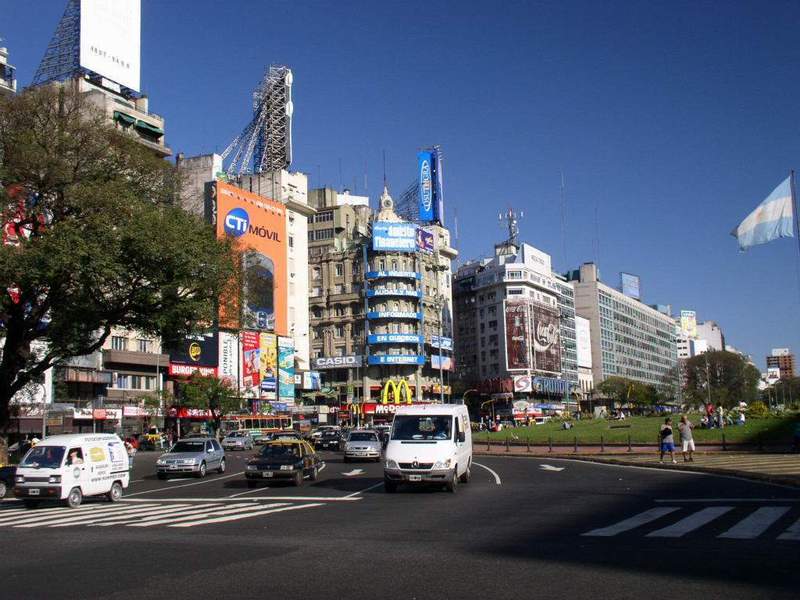
We arrived in Buenos Aires a week past on Friday (December 10th) with an
uncertain itinerary. This is the last segment of my trip from Alaska to Tierra
del Fuego, and to complete my journey I just need to head south from Buenos
Aires. But first, Jan and I planned a quick vacation together.
I want to see Iguaçu Falls, one of the highlights of South America, and we talk
about riding there, then taking a loop through southern Brazil, Uruguay and back
to Buenos Aires. Jan needs to be back in Seattle for an early Christmas with the
kids and grandkids on December 19, so we have only a week. I call Javier (where
my bike is stored) Friday evening and determine that the maintenance (and that
darn tail rack) won’t be finished for a few days. Further, just before we flew
down, I checkd travel arrangements for entering Brazil and realize that
Americans need a visa at the extortionate cost of USD$100 each. (As an aside,
this is the end result of a tit-for-tat diplomatic squabble following the United
States ramp-up of security after the September 11 tragedy. We put Brazil on a
watch-list for incoming nationals. Brazil began to finger print Americans
visitors. We retaliated with finger printing and a visa requirement. They added
a USD$100 fee. Perhaps some of my steps are slightly out of order, but you have
the picture by now, I’m sure.) For one or two days, the cost just isn’t worth
it. Also, as I lay out the route, it appears to be seven straight days of
riding, riding and more riding. That’s an opportunity to experience nothing
while seeing everything, and a ticket to marital discord, to say nothing of a
sore posterior. Clearly a new plan is in order.
At a travel agency in downtown Buenos Aires we discover that we can fly to
Iguaçu Falls for two days at half the price we were quoted in the States. Our
bike would be done when we return, and we would have a few days to complete a
short motorcycle tour.
 So
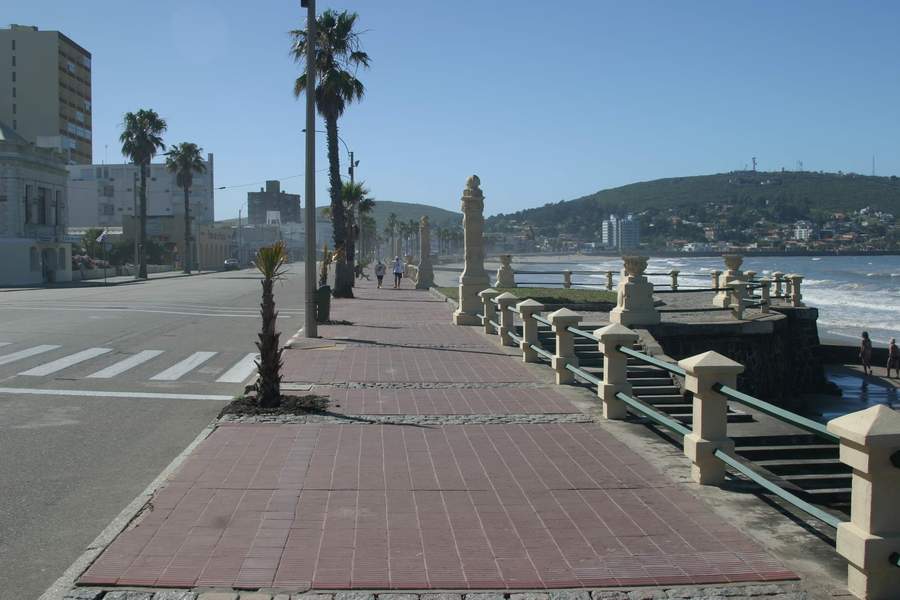
that’s how we find ourselves in Uruguay. We’re greeted by tidy houses, farms on
fertile land (the Pampas extend east into Uruguay) and vistas of gently rolling
countryside. As in eastern Argentina, the rural areas are reminiscent of the
American Midwest. We enjoy the small towns of Mercedes and Cardona. In the
pelting rain we scramble for cover along the boardwalk in the beach town of
Piriapolis; poking our heads into gift shops and determining that the same three
dozen items are sold in tourist areas the world over. We dodge crazy drivers
trying to run us down in the sprawling capital of Montevideo, and whiz along the
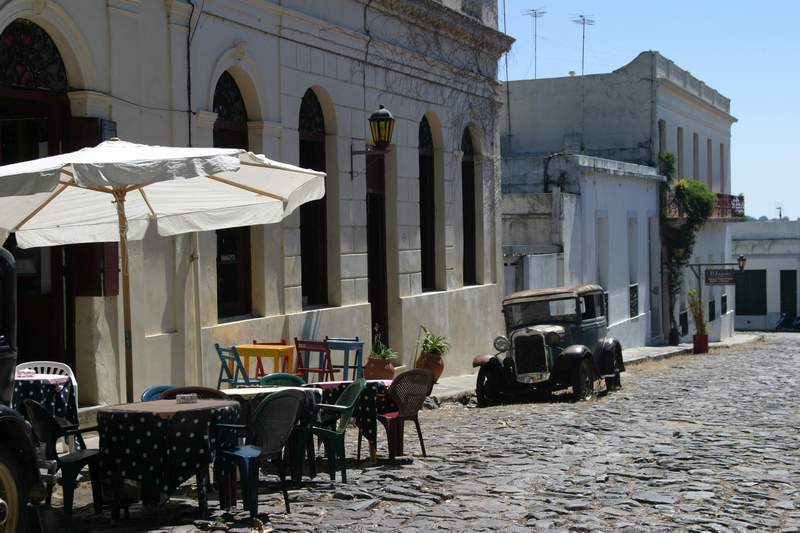
autopista at 70mph in the countryside. On our way to Colonia, a small city
founded by the Portuguese in 1680, we marvel at miles of palm trees, in
virtually perfect uniformity, lining the two-lane road.
So
that’s how we find ourselves in Uruguay. We’re greeted by tidy houses, farms on
fertile land (the Pampas extend east into Uruguay) and vistas of gently rolling
countryside. As in eastern Argentina, the rural areas are reminiscent of the
American Midwest. We enjoy the small towns of Mercedes and Cardona. In the
pelting rain we scramble for cover along the boardwalk in the beach town of
Piriapolis; poking our heads into gift shops and determining that the same three
dozen items are sold in tourist areas the world over. We dodge crazy drivers
trying to run us down in the sprawling capital of Montevideo, and whiz along the
autopista at 70mph in the countryside. On our way to Colonia, a small city
founded by the Portuguese in 1680, we marvel at miles of palm trees, in
virtually perfect uniformity, lining the two-lane road.
Uruguay has been democratic for the past ten years, following several decades of
dictatorship in one form or another. Some have been relatively benign, while
others have been both brutal and corrupt. Through it all, though, Uruguay has
managed to develop one of the highest per capita income levels in South America,
at just under USD$9,000 in 2000, and a life expectancy of around 75 years that
rivals North America and Western Europe.
 Unfortunately,
the country is squeezed between South America’s super-states of Argentina and
Brazil. As with all economies of disproportionate size (think the US and Canada,
Germany and Poland, and China or Japan and just about everybody else in eastern
Asia), when the bigger economy gets a cold, the smaller one often gets
pneumonia. I’ll skip most of the details, but with Argentina’s economic
melt-down (discussed in Journal 14 – South America, Part 1) and the global
economic slow-down, both beginning in 2000, that adversely impacted the entire
region, Uruguay found itself in financial crisis. The Uruguayan currency, which
traded at 14 pesos to the U.S. dollar in 2002, is now over 25. That’s virtually
a 100% devaluation relative to a very weak dollar. In practical terms, that new
Ford the Uruguayan was going to purchase just doubled in price, while his wages
likely dropped.
Unfortunately,
the country is squeezed between South America’s super-states of Argentina and
Brazil. As with all economies of disproportionate size (think the US and Canada,
Germany and Poland, and China or Japan and just about everybody else in eastern
Asia), when the bigger economy gets a cold, the smaller one often gets
pneumonia. I’ll skip most of the details, but with Argentina’s economic
melt-down (discussed in Journal 14 – South America, Part 1) and the global
economic slow-down, both beginning in 2000, that adversely impacted the entire
region, Uruguay found itself in financial crisis. The Uruguayan currency, which
traded at 14 pesos to the U.S. dollar in 2002, is now over 25. That’s virtually
a 100% devaluation relative to a very weak dollar. In practical terms, that new
Ford the Uruguayan was going to purchase just doubled in price, while his wages
likely dropped.
 So,
to be sure, Uruguay has its problems, but they’re not obvious to us as we ride
good roads, enjoy clean towns and meet warm, friendly and helpful people. Our
short trip ends on a high-speed ferry from Colonia back to Buenos Aires. We both
agree that we could stay another week.
So,
to be sure, Uruguay has its problems, but they’re not obvious to us as we ride
good roads, enjoy clean towns and meet warm, friendly and helpful people. Our
short trip ends on a high-speed ferry from Colonia back to Buenos Aires. We both
agree that we could stay another week.
Iguacu Falls
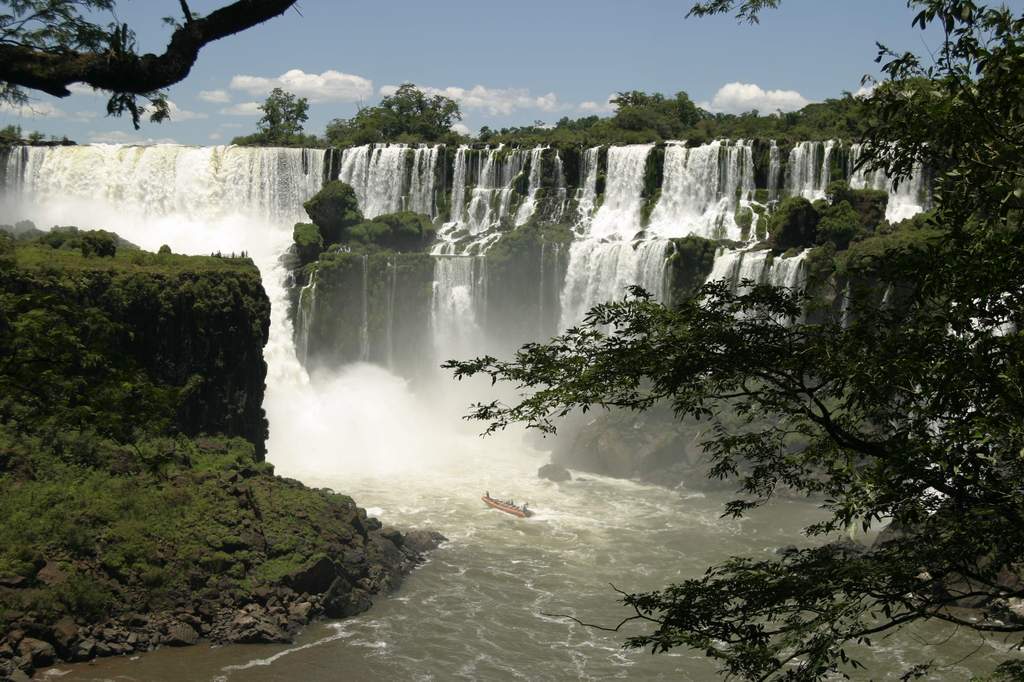
Here are a few words about Iguacu Falls. They are situated in extreme
northeastern Argentina, approximately 1,000 km (600+ miles) northeast of Buenos
Aires, where Brazil, Paraguay and Argentina meet. The beauty of the falls, over
2km (1.6 mile) wide and 80m (240’) deep, can hardly be exaggerated. In Argentina
I’ve heard it said that the North American visiting Iguaçu will shake their head
and say “poor Niagara.” Probably only Victoria Falls in Africa is in the same
league. My writing skills won’t do them justice, so I’ll let a picture of just
part of the falls fill out the details.
Buenos Aires
Bold, brash and beautiful, Buenos Aires surely deserves its own journal, but a
few lines will have to suffice at this time. The capital of Argentina, this most
cosmopolitan of South American cities has a population, by various estimates, of
11 –13 million people. It rivals European capitals such as London and Paris in
elegance and sophistication. Just before I left to fly down here, I read an
article in a travel magazine that named Buenos Aires and Vancouver, Canada as
the two most beautiful cities in the Americas. Perhaps others may be equally
deserving, but both are excellent choices.
Friends and fellow travelers
While a journey like this is about the scenery of the Cordillera Blanca and
special places like Machu Picchu and the Salar de Uyuni, I believe that it is
mostly about the people I meet along the way. You’ve already read about Ricardo
in Ecuador, Ivan in Lima, the biker contingent in Cusco and Wilma and her
friends on the Altiplano of Boliva. I’d like to introduce a few more.
Patricia sent me an e-mail a few months after I finished my Alaska journal in
1999. The exact details are getting a bit sketchy, but I believe that
MotoJournals.com got linked to a South American motorcycle web site, and she
read my account there. An exchange of e-mails started between us and continued
over the past five years. As you may have guessed, she and her husband, Marcos,
are both avid motorcycle riders and fellow bike travelers. I promised to look
them up when I visited South America, and then cancelled the two trips that I
had scheduled. However, I notified them again before Part 1 of my South America
trip this past August, and by Peru we were making arrangements to meet when I
arrived in Buenos Aires.
As it turns out, we had dinner in downtown Buenos Aires on the day after I
arrived and they insisted on driving me to the airport when I flew out. On this
trip down, Jan and I again had dinner with them.
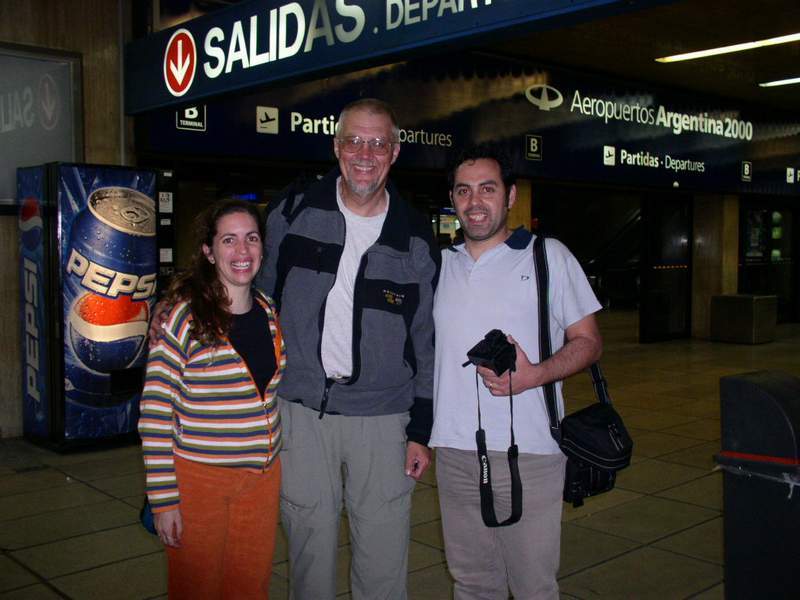 Patricia
and Marcos are professionals in their 30s who both work for the same consulting
firm. They are expecting their first child in January, and told us that their
traveling plans are on hold while they save for a home. They gave me lots of
ideas on places to visit, both in Buenos Aires and in Argentina. Patricia speaks
fluent English.
Patricia
and Marcos are professionals in their 30s who both work for the same consulting
firm. They are expecting their first child in January, and told us that their
traveling plans are on hold while they save for a home. They gave me lots of
ideas on places to visit, both in Buenos Aires and in Argentina. Patricia speaks
fluent English.
Two riders referred me to Sandra and Javier, the owners of Dakar Motos, located
in the Buenos Aires suburb of Vincente Lopez. Eric and Gail Haws, retired now,
and living a life of international motorcycle traveling from their home base
near Eugene, Oregon, I believe were the first. While staying at Eric and Gail’s
home for two nights this past summer, Eric and I discussed my upcoming trip to
South America. I was debating whether to break the trip in La Paz, Bolivia, or
Buenos Aires. Eric suggested that if I decided on Buenos Aires, I should contact
Sandra and Javier. Later, in an e-mail, my old buddy, Ricardo Rocco, also
suggested his friends Sandra and Javier. As an aside, they are both fluent in
English.
As it turns out, when I first visit their shop there are at least three or four
other bikes left there by visiting travelers representing Canada, the United
States and Western Europe. The handlebars of my BMW are too wide to easily fit
through the front door of their shop, so they store my bike (and most of my
gear) at their house. In spite of my repeated protests, they won’t accept one
peso for their effort. To boot, they insist that I come to their house for
dinner before flying back to Seattle in September.
Around forty, I’d guess, and with two children, Javier and Sandra are avid
riders, with a dream of some day riding to the far corners of the earth. I also
believe that they just love fellow motorcycle travelers. When Jan and I arrive
back in Buenos Aires, Javier says that they have a note for me from Mary Stuart.
Mary, from Scotland, has been riding a 650cc BMW, solo, across South America. We
just missed each other in Ecuador, and by e-mail have agreed to hook up in
Buenos Aires. Unfortunately, just a couple of days before Jan and I arrive her
father passed away, and Mary has flown home. I meet her bike, though, and as you
might have guessed, it is stored with Sandra and Javier. It goes without saying
that I owe these folks a debt of gratitude. Jan and I hope we can repay it when
Sandra and Javier eventually visit us in Seattle. In the meantime, I’ll try to
spread their kindness to fellow travelers whose path I cross.
While picking up the last of our things at Dakar Motos this past Friday, Jan and
I meet Guy and Inga, a young couple from Belguim. For the past year they have
traveled around South America in a Land Cruiser converted into a camper.
Previously they had ridden BMW motorcycles around Europe, and at least Guy had
ridden his throughout South America. They are temporarily “done” with Europe as
their home, and are moving to Bolivia to work for a friend who owns an adventure
mountain bicycling company. I believe that they know Sandra and Javier from
Guy’s previous motorcycle trip.
Back on the road
Saturday night finds me in Azul, a small city two hundred miles southeast of
Buenos Aires, in the heart of the Pampas. For several years I’ve heard about La
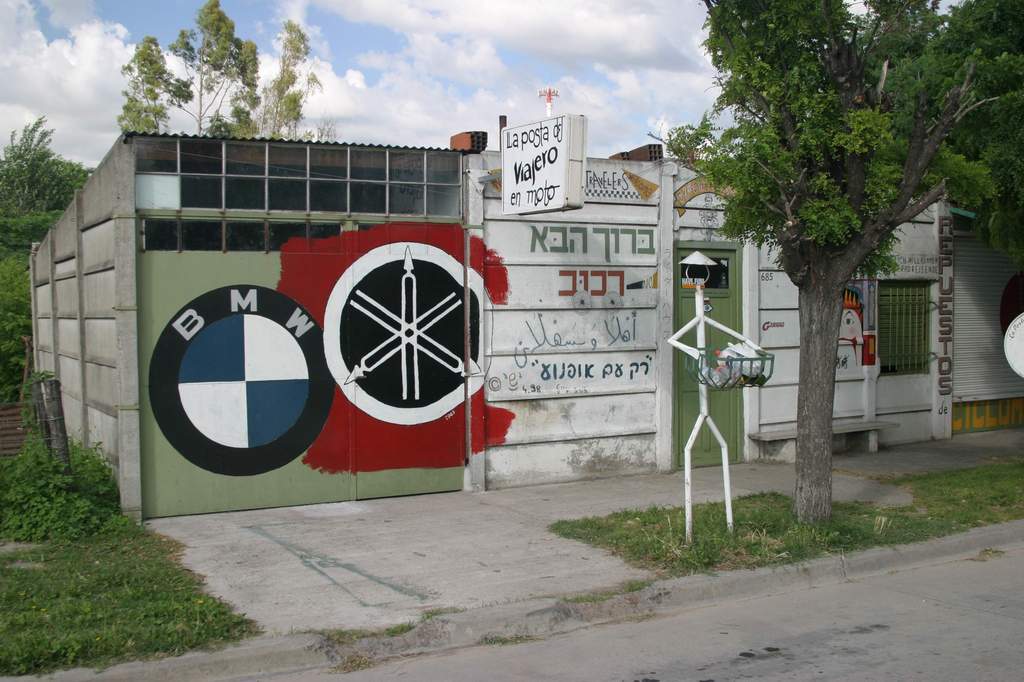
Posta del Vajero En Moto, a motorcycle hostal owned by Jorge Cuatrochio. Jorge
owns a motorcycle shop, and attached to it is a small garage for travelers to
pull their bike off the street, as well as a kitchen and beds for at least four
riders. Jorge doesn’t charge you to stay, and within reason it can be as long as
you need. There is a donation box, and I’m sure that everyone contributes.
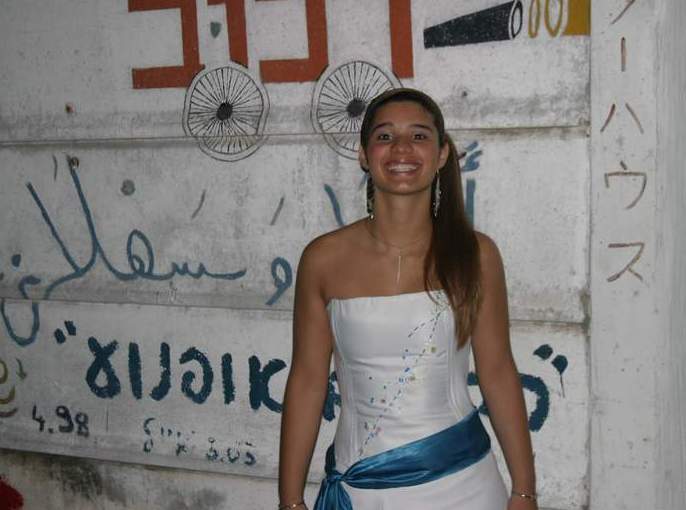
Although Jorge doesn’t speak English, his daughter is fluent, and plans to start
university this year with hopes to be a translator. She had just finished high
school, and I got a lovely picture of she and her dad headed off to her
graduation dinner.
 Amazingly,
the list goes on. At La Posta, I meet Javier (from Argentina) and his wife Petra
(from Germany). Although they live in Germany, they are presently spending
several months touring Argentina by car. They want their two young children to
know their father’s homeland. Petra and Javier met in Miami while she was on a
backpacking trip through Central America, and he was wrapping up a 26,000-mile
motorcycle ride from Argentina to the U. S., where he visited forty states.
Amazingly,
the list goes on. At La Posta, I meet Javier (from Argentina) and his wife Petra
(from Germany). Although they live in Germany, they are presently spending
several months touring Argentina by car. They want their two young children to
know their father’s homeland. Petra and Javier met in Miami while she was on a
backpacking trip through Central America, and he was wrapping up a 26,000-mile
motorcycle ride from Argentina to the U. S., where he visited forty states.
When I leave in the early evening to find an Internet connection, I am the only
motorcycle traveler at La Posta. When I return two hours later, there are two
more. Jens, a German, is riding a brand new BMW 1200GS, the updated version of
my bike. A world traveler, this is at least his second bike trip through
Argentina, and he has a month. He rode to Tierra del Fuego last time. Frederic,
a French man living and working in Los Angeles for the past seven years, is on a
one-year sabbatical from his company, and has spent it touring the world on his
BMW 1000 Paris Dakar. He is on the last leg of his journey and headed back to
Los Angeles, after having crossed Russia, Western Europe and North Africa.
 While the group of us trade stories and a few lies to be sure, a final guest, a
friend of Jorge’s, appears in suit and tie. He is here to join Jorge at Penny’s
graduation dinner. Although realizing that they have already left, he doesn’t go
before first telling us about his recent five-month trip by motorcycle from
Argentina to Seattle and back.
While the group of us trade stories and a few lies to be sure, a final guest, a
friend of Jorge’s, appears in suit and tie. He is here to join Jorge at Penny’s
graduation dinner. Although realizing that they have already left, he doesn’t go
before first telling us about his recent five-month trip by motorcycle from
Argentina to Seattle and back.
So,
at the end of the day, these trips are about the people. They are about friends
like Ricardo, Patricia and Marcos, and Sandra and Javier. They are about people
who’s paths I’ve crossed like Wilma in Bolivia, and Ivan in Lima. They are also
about the British and American bikers I met in Cusco, and the fellow travelers
at La Posta.
So to all of them, thanks for the memories and keep the rubber side down.
