Santiago, Chile
January 17, 2005
North to Santiago - Part 2
The geography and the recent political history of Chile
 By the time I arrived in Coihaique, Chile from the rigors of La Ruta Cuarenta (Ruta
40), I was weary. As I’ve discussed in some detail in previous journals, the
gravel and the perpetual winds of Patagonia beat me up. I needed a few days to
rest before tackling the Crater Austral; the gravel road also known as
“Pinochle’s folly” that essentially runs south some 600 miles (1,000km) from the
city of Puerto Mont, through the area known as the Chilean Patagonia (the
attendant waterway is called the Chilean Inside Passage). But before we make
this ride together, we need to discuss Chile’s geography and politics to put it
all in perspective.
By the time I arrived in Coihaique, Chile from the rigors of La Ruta Cuarenta (Ruta
40), I was weary. As I’ve discussed in some detail in previous journals, the
gravel and the perpetual winds of Patagonia beat me up. I needed a few days to
rest before tackling the Crater Austral; the gravel road also known as
“Pinochle’s folly” that essentially runs south some 600 miles (1,000km) from the
city of Puerto Mont, through the area known as the Chilean Patagonia (the
attendant waterway is called the Chilean Inside Passage). But before we make
this ride together, we need to discuss Chile’s geography and politics to put it
all in perspective.
A quick glance at a map or globe reveals that Chile covers almost half the
Pacific coastline of the South American continent. Lonely Planet says that
distance is almost 2,700 miles (4,300km). Other sources peg Chile’s coastline at
almost 4,000 miles (6,500km). Coastlines are difficult to measure. Certainly
it’s long. In a strange twist of geography, however, Chile is only slightly
wider than 120 miles (200km) at any point, squeezed between the Pacific Ocean
and the Andes Mountains for its entire length. Packed into a country the size of
Texas, Chile extends from 20 degrees to 55 degrees south latitude. In North
America, an equivalent range of latitude would extend from Mexico City in the
south, to almost Juneau, Alaska in the north.
 Compressed into Chile’s string-bean layout is an impressive display of physical
features, from the Atacama Desert in the north (thought to be the driest desert
on earth – some observation stations have never had measurable precipitation) to
peaks in the Andes Mountains that top out at nearly 23,000’ (7,000m). There is
fertile farmland for 700 miles (1,100km) in the Central Valley that produces a
vast selection of fruits, vegetables and fine wines. Many of these products are
in your local grocery store. The extreme south, Chilean Patagonia), is a land of
high peaks, rainforests and glaciers spread over a bewildering scattering of
islands and fiords.
Compressed into Chile’s string-bean layout is an impressive display of physical
features, from the Atacama Desert in the north (thought to be the driest desert
on earth – some observation stations have never had measurable precipitation) to
peaks in the Andes Mountains that top out at nearly 23,000’ (7,000m). There is
fertile farmland for 700 miles (1,100km) in the Central Valley that produces a
vast selection of fruits, vegetables and fine wines. Many of these products are
in your local grocery store. The extreme south, Chilean Patagonia), is a land of
high peaks, rainforests and glaciers spread over a bewildering scattering of
islands and fiords.
Before lunch one day in Coihaique, a middle-aged man came over to admire the
bike, which I’d ridden into town from the hostal, and to discuss my trip. His
English was quite good and we conversed for some time. When I asked where he
lived, I meant in which part of Chile, but the reply came back “Sweden.” “How
long have you been in Sweden,” I asked. “Thirty years,” came the reply. “But you
are Chilean,” I asked. “Yes, I am Chilean and my family lives here.” “So why did
you move to Sweden?” There was a one-word reply. “Pinochet.”
 General Augusto Pinochet is inexorably linked both to Chilean politics and the
construction of the Carretera Austral. While Chile’s democratic roots date to
the late-19th century, what appears to presently shape the nation’s collective
consciousness is the election, in 1970, of socialist Salvador Allende and the
subsequent rule of General Pinochet. Allende was hated by the oligarchy and the
extreme right wing military that had always maintained a strong presence in
Chilean politics. The United States was at the height of cold war tensions, and
the Nixon Administration was less than thrilled at the prospect of another
socialist-cum-communist government in the Americas. So in 1973, with the CIA as
a silent participant it is heavily rumored, a junta led by General Pinochet
overthrew the democratically elected government of President Allende in a volley
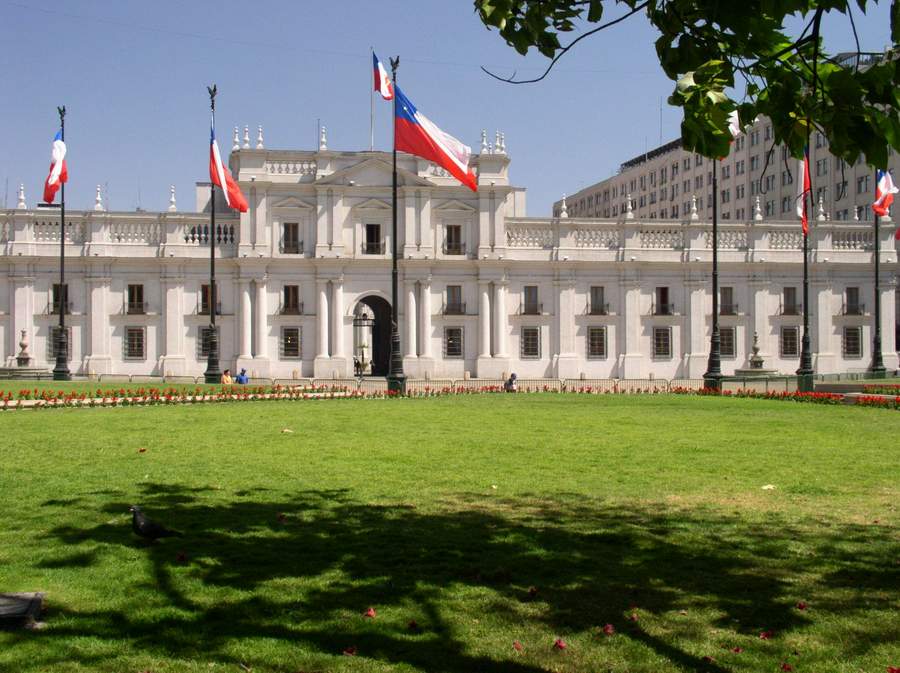
of bullets and bombs into Palacio de la Moneda (the Chilean White House).
General Augusto Pinochet is inexorably linked both to Chilean politics and the
construction of the Carretera Austral. While Chile’s democratic roots date to
the late-19th century, what appears to presently shape the nation’s collective
consciousness is the election, in 1970, of socialist Salvador Allende and the
subsequent rule of General Pinochet. Allende was hated by the oligarchy and the
extreme right wing military that had always maintained a strong presence in
Chilean politics. The United States was at the height of cold war tensions, and
the Nixon Administration was less than thrilled at the prospect of another
socialist-cum-communist government in the Americas. So in 1973, with the CIA as
a silent participant it is heavily rumored, a junta led by General Pinochet
overthrew the democratically elected government of President Allende in a volley
of bullets and bombs into Palacio de la Moneda (the Chilean White House).
As happened with military takeovers in both Argentina and Uruguay about the same
time, the Pinochet Regime commenced a purge of academics, professionals and
liberals of all descriptions, as part of a similar action across the region
known as “the Dirty Wars.” Thousands of people were killed and thousands more
are still unaccounted for. To give an insight into the brutality of civil rights
violations in the region, it’s said that the Argentine military pushed its
victims out of helicopters. The Pinochet Regime was less barbaric in that they
killed their victims before pushing them out.
The Argentine military was inexorably weakened by their foolhardy invasion of
the British Falkland Islands (Islas de Malvinas in Argentina) in the
early-1980s, and most of us remember the three weeks of escalating tension as
the British Fleet steamed slowly down the North and South Atlantic Oceans toward
their summary expulsion of the Argentine occupation. (What, did they think that
Margaret Thatcher wouldn’t mind?) Argentina soon returned to democracy. General
Pinochet, however, ruled Chile with an iron fist until elections were finally
held in 1989.
 So, the family of my conversational partner in Coihaique fled to Sweden one step
ahead of a Pinochet bullet, no doubt. Others I have spoken to returned to Chile,
including Wladamir, an employee of the freight company I’m using in Santiago.
His family fled to Bulgaria for 15 years. When I asked him why they had moved to
Bulgaria, although I was sure I knew the answer based on when they left Chile,
he quietly spat out just one word. “Pinochet.” (Note: General Pinochet, while
seeking medical treatment in Britain about six years ago, was indicted by a
Spanish judge for crimes against Spanish citizens during his reign of terror.
Britain held him for some time then released him to Chile’s custody with a
promise that he would stand trial for atrocities committed by his junta. He is
old, ill, and under indictment in Chile for war crimes, but it remains to be
seen whether he will ever stand trial.)
So, the family of my conversational partner in Coihaique fled to Sweden one step
ahead of a Pinochet bullet, no doubt. Others I have spoken to returned to Chile,
including Wladamir, an employee of the freight company I’m using in Santiago.
His family fled to Bulgaria for 15 years. When I asked him why they had moved to
Bulgaria, although I was sure I knew the answer based on when they left Chile,
he quietly spat out just one word. “Pinochet.” (Note: General Pinochet, while
seeking medical treatment in Britain about six years ago, was indicted by a
Spanish judge for crimes against Spanish citizens during his reign of terror.
Britain held him for some time then released him to Chile’s custody with a
promise that he would stand trial for atrocities committed by his junta. He is
old, ill, and under indictment in Chile for war crimes, but it remains to be
seen whether he will ever stand trial.)
So what does Pinochet have to do with my motorcycle trip? Well, as a public
works project to get a moribund economy moving again and to forestall what he
saw as expansionist leanings of the Argentine military, he commenced
construction of the Carretera Austral, a road that would ultimately open up
Patagonian Chile to development and tourism, as well as linking a number of
small villages with the mainland. From Chaiten, essentially the northernmost
point of the highway (although there are links by road and ferry another 100
miles (160km) north to Puerto Montt) this road extends 250 miles (400km) south
to Coihaique and then another 350 miles (600km) further south to the settlement
of Villa O’Higgens. With the exception of about 100 miles (160km) around
Coihaique, it is all gravel.
I stayed at the hostal Albergue Las Salamandras for two nights, fully expecting
to stay a third, when I discovered the Navimag office in downtown Coihaique.
Expecting that ferries from Chaiten to either Puerto Montt or Chiloe Island (an
alternative destination from which I could ride to Santiago after a short ferry
ride to Puerto Montt) would be frequent, I hadn’t worried much about
reservations. I figured that I’d ride to Chaiten and get in line. But when I
inquired at the Navimag office, I discovered that there was only one boat a week
from Chaiten to Puerto Montt, and two boats a week from Chaiten to Chiloe
Island. The Chiloe Island ferries were on Mondays and Thursdays. The ferry to
Puerto Montt was on Saturday night at 9pm. I needed to be in Santiago no later
than Friday morning and I hoped to stay in Pucon (in the Chilean lake district,
200 miles north of Puerto Montt) for a few days, and unless I caught the
Saturday evening boat to Puerto Montt, that wasn’t going to happen.
North of Coihaique
 The Carretara Austral north of Coihaique is another long, tough gravel road,
this time width a time frame. The hostal owner said that it was eight hours to
Chaiten. I immediately figured on 12. At 5pm on Friday afternoon I pulled out of
Coihaique bound for a promised hostal and gas break in Puerto Puyuguapi, about
halfway.
The Carretara Austral north of Coihaique is another long, tough gravel road,
this time width a time frame. The hostal owner said that it was eight hours to
Chaiten. I immediately figured on 12. At 5pm on Friday afternoon I pulled out of
Coihaique bound for a promised hostal and gas break in Puerto Puyuguapi, about
halfway.
Now that you’ve ridden with me on a number of nasty roads, particularly on this
segment of the trip, I’ll present the high points of this road, rather than
boring you again with the myriad details. Although it starts out on pavement
through a pleasant river valley dedicated to farming and framed by towering
mountains, it soon deteriorates to a double-track construction site as it heads
for the Lago Los Torres Nature Reserve. At various points the road is cut into
the side of the mountain, with over-hanging cliffs and ample evidence of mud
slides. In spite of the road surface, I kept my hand firmly on the throttle as I
traversed those areas.
As the Carretera Austral ascended thought the Nature Reserve, the switchbacks
became so tight and the gravel so coarse that I couldn’t round the corners
without using most of the left-hand lane. Pouring rain and deep forests
completed the picture, except for a hanging glacier that emerged not far above
me, just before I entered the cloud at the top of the pass. It glowed muted neon
blue in the failing light. For at least an hour I shifted back and forth between
1st and 2nd gears, generally making no more than 10mph. Since it was getting
dark, I was making poor time, and I was uncertain about the distance on to
Puerto Payuguapi, I stopped at the first sign I encountered that offered lodging
– Cabanas Fiordo Queulat. It was 9:15pm Friday night.
I asked about dinner as I unpacked the BMW and transferred the load to my
cabana; specifically requesting just “sopa y pan con mantiquilla.” Soup and
bread with butter was all I could eat at that late hour, having never gotten
used to the Latin custom of starting dinner at 9pm or 10pm. I glanced back
through the cookhouse window as I finishing unpacking and saw biscuits, just
newly formed, being placed into the oven of a wood stove. A week later, I can
still taste those biscuits and feel the warmth of that wood stove.
It was sunny and clear the following morning as I left the cabanas and made my
way the 18 miles (30km) north to Puerto Payugapi. The mountains, visible now
without the rain clouds, rose to dizzying heights. The ocean inlet sparkled in
the morning sunshine. There was not so much as a breeze. As I rode to the gas
station, I noticed Roberto’s BMW 1200GS parked in front of a hostal. After
meeting him in Ushuaia, (I inadvertently called him Ricardo in that journal) I
saw him briefly in Coihaique. But I was tired again that morning, a constant
complaint on this trip (I believe the conditions in Patagonia have been just too
tough for the speed at which I have been covering the mileage) and surely
exacerbated by the stress of the poor road in the failing light on Friday night.
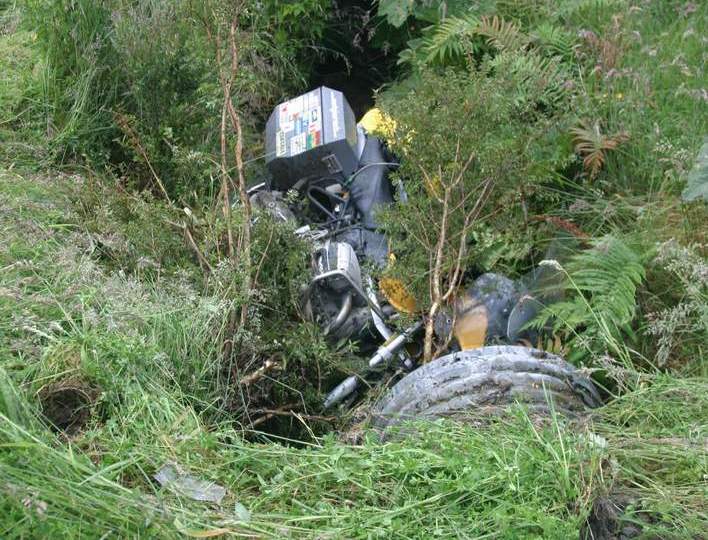
 About two miles (3km) past gas at Puerto Puyuguapi I moved the bike to the right
edge of the road to escape some bad washboard and got caught up in vegetation
growing right to the roadbed. As I tried to both slow down the big twin and move
it back to the road, a culvert caught up with my accident-free record of the
22,000 miles (40,000km) on this amazing journey. In retrospect and in
consideration of the minimal amount of damage incurred, I must have slowed from
about 30mph to maybe 10mph when the BMW jumped the stream that flowed through
the culvert, and I was unceremoniously ejected across the windshield. The bike,
facing 270 degrees from its original line of travel, was on its left side, with
a cylinder, hard bag and both wheels in a foot of water. After sliding down the
bank, I came to rest on top of the bike.
About two miles (3km) past gas at Puerto Puyuguapi I moved the bike to the right
edge of the road to escape some bad washboard and got caught up in vegetation
growing right to the roadbed. As I tried to both slow down the big twin and move
it back to the road, a culvert caught up with my accident-free record of the
22,000 miles (40,000km) on this amazing journey. In retrospect and in
consideration of the minimal amount of damage incurred, I must have slowed from
about 30mph to maybe 10mph when the BMW jumped the stream that flowed through
the culvert, and I was unceremoniously ejected across the windshield. The bike,
facing 270 degrees from its original line of travel, was on its left side, with
a cylinder, hard bag and both wheels in a foot of water. After sliding down the
bank, I came to rest on top of the bike.
I’m sure the habit I picked up a few years ago of always wearing a full-face
helmet and complete riding gear (gloves, heavy boots and Cordura nylon with skid
patches top and bottom) stood me in good stead. I scrambled back up the bank,
quite amazed that nothing hurt. The bike, however, was four feet below the road
surface, in a streambed.
First on the scene was a group of Italian bicyclists who had their own film crew
along to document their ride on the Carretera Austral. In spite of my lack of
injuries, I didn’t feel much like clowning for the cameras. Roberto was next. He
glanced at the bike, made sure that I wasn’t in shock, and quickly realized that
we needed professional help to extract the BMW. As he returned to the village of
Puerto Puyuguapi I unloaded the bike to lighten the load. Amazingly, my laptop
and both digital cameras were on the right (the “up” side) side of the bike. I
couldn’t get to the left side of the bike to inspect for damage, since it was
under water, but at a minimum I expected a twisted front end and possibly a
damaged cylinder.
Roberto was successful in recruiting a mechanic and his two helpers from the
village. With exacting skill and three ropes they righted the bike then pulled
it up the bank backwards with a 4x4 pickup. Amazingly, there appeared to be no
damage. The mechanic signaled that I should start it, and it turned over at the
first push of the starter button. Now I was in shock. What a stroke of pure
luck.
I paid the mechanic and the accompanying gaggle of onlookers began to disperse.
Roberto and I shared a grin and a hug and a few words of amazement. Talk about
dodging the bullet.
By now I was wide-awake, adrenaline pumping through my system. It had been over
two hours since the accident (or was that now an incident?), and it was past
1pm. Slowly I made my way across the remaining 125 miles (200km) of the
Carretera Austral’s gravel to Chaiten, where I arrived before 7pm. There was
ample time to catch the overnight boat to Puerto Montt.
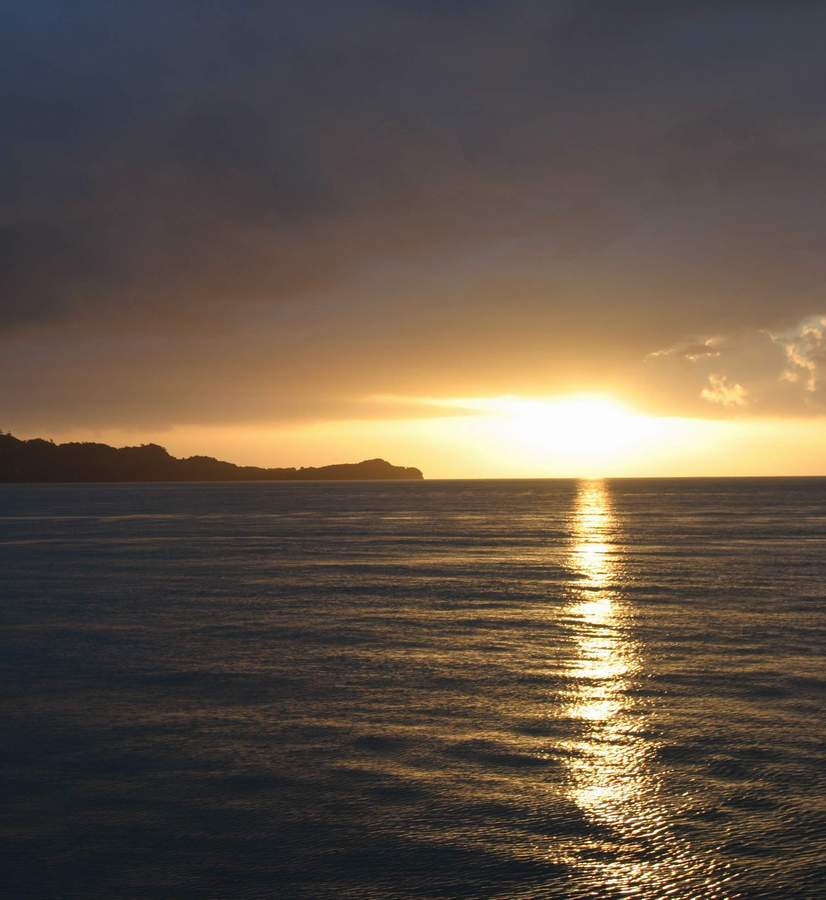
As we arrived in Puerto Montt, at the top of Chilean Patagonia, a light breeze
stirred the port’s pungent odors and the city was bathed in soft morning
sunshine. I was done with the wind and gravel of Patagonia.
[Follow up note: It’s over 700 miles north from Puerto Montt to Santiago, all on
the autopista known as Ruta 5. I had some riding to complete before I turned in
my bike at Santiago, but clearly this journey had reached its emotional
conclusion.
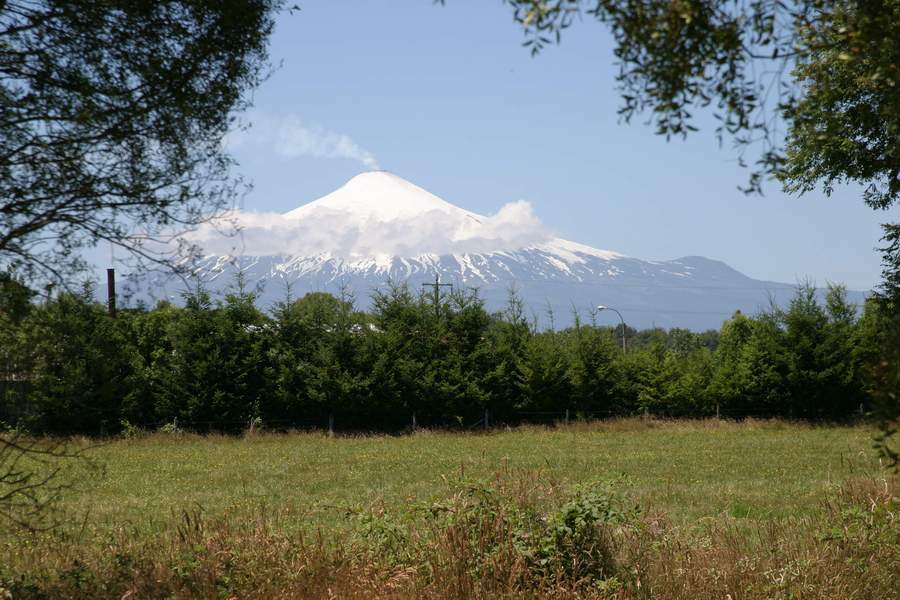
As scheduled, I stayed in Puncon for three nights, writing, relaxing and
enjoying the views of nearby Vulcan Villarrica, a 9,300’ (2,800m) active
volcano. I will be in Santiago for a full week, attending to the crating and
shipping of the bike, before flying out next Thursday.
My ditch incident left me without a scratch. I ride between 12,000 and 15,000
miles (20,000 – 25,000km) a year, and in almost 40 years of riding motorcycles,
that is only the second time that I’ve put a motorcycle on the ground, in
anything other than a no-or-low speed tip-over. I’m careful, and certainly I’ve
been lucky. The BMW has a couple of scratches and I cracked the lower Plexiglas
fairing. What a bike.]
